Nigeria’s waste management challenge is not rooted in the absence of policies. It lies in the difficulty of translating well-articulated national frameworks into coordinated action at state and local levels where implementation truly occurs.
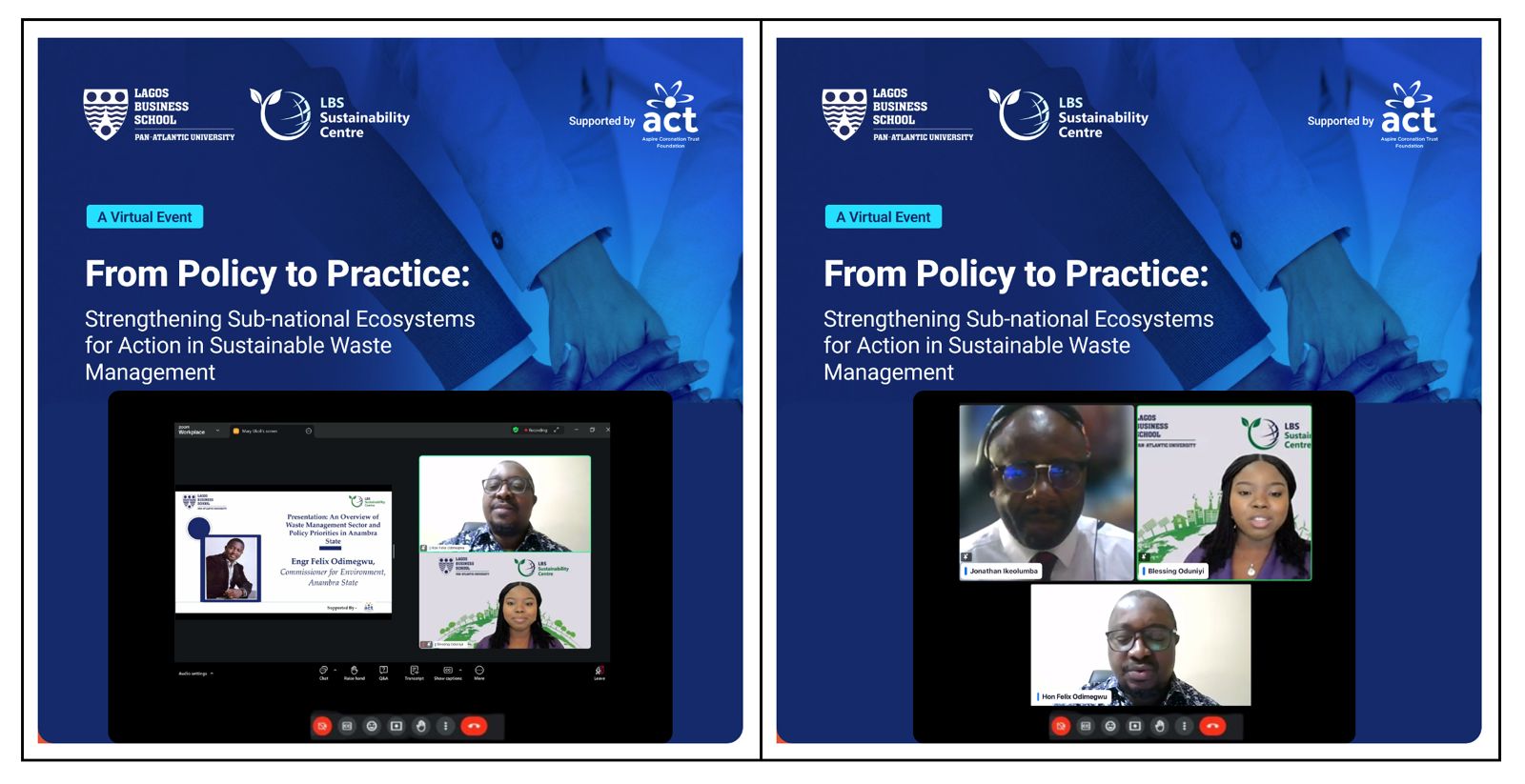
The critical gap between policy design and practical execution formed the centre of discussions at the Regulators and Business Stakeholders Engagement Webforum convened by the Lagos Business School Sustainability Centre (LBSSC), with support from the Aspire Coronation Trust (ACT) Foundation, on January 23, 2026. The engagement brought together regulators, state actors, private sector leaders, and sustainability stakeholders to examine how Nigeria can strengthen subnational ecosystems to enable sustainable waste management and accelerate the transition to a functional circular economy.
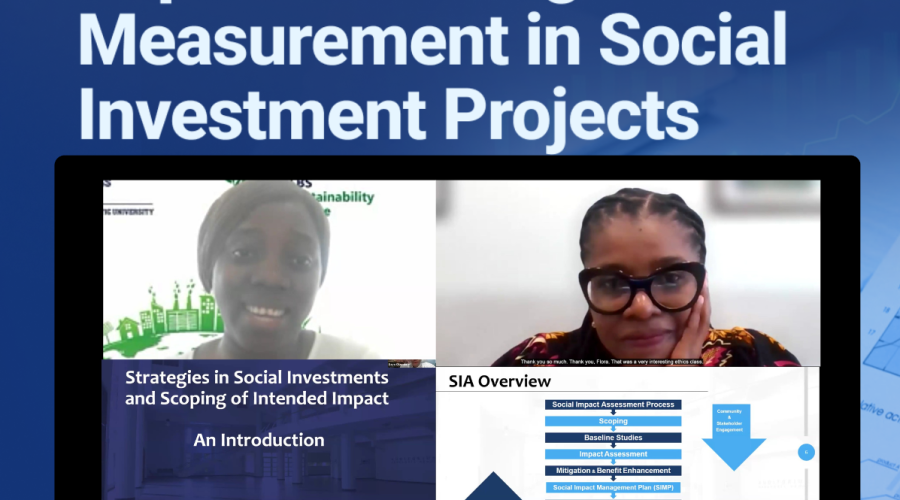
In her welcome remarks, Theresa Akpoveso, Manager, Programmes Design and Management at LBSSC, reaffirmed the Centre’s commitment to enabling multi-stakeholder collaboration required to bridge the gap between regulation and practice. Blessing Oduniyi, Associate, LBSSC moderated the session, steering the conversation to focus the shifts needed from policy formulation to effective implementation.
Speaking from a state execution perspective, Hon. Felix Odimegwu, Commissioner for Environment, Anambra State, highlighted the environmental and economic consequences of inefficient waste systems and stressed the urgency for states to develop context-specific solutions that reflect their unique realities and capacities.
Providing a regulatory lens, Engr. Chukwudi Nwabuisiaku of the National Environmental Standards and Regulations Enforcement Agency (NESREA) emphasised that while enforcement remains central to progress, it cannot succeed in isolation. “That is the core mandate of NESREA. But we know we don’t do it alone. We have partners in the states and in the local governments… Another issue that can hamper implementation is stakeholders’ behaviour,” he noted. He shared examples of intensified enforcement actions across states, including the sealing of non-compliant facilities, while underscoring that sustainable outcomes depend on greater awareness, citizen participation, and intergovernmental collaboration.
From a research and systems perspective, Dr. Jonathan Ikeolumba, Fellow LBSSC, shared insights from the Centre’s study on subnational ecosystems, drawing attention to the critical role of state and local government structures in driving sustainable waste systems. “When we say subnationals, we’re speaking to the states and the local governments… how those actions at the state and local governments in itself could strengthen this idea of sustainable waste management across the country,” he explained, reinforcing the importance of strengthening institutional capacity at these levels.
Adding a plastics and circular economy dimension, Esther Fagbo, Manager, Nigeria National Plastic Action Partnership (NPAP), emphasised that meaningful impact begins where communities experience the daily realities of waste challenges. “We recognise that effective implementation must begin at the subnational level, this is where the communities feel the daily impact of waste management challenges,” she stated, while also highlighting NPAP’s work in fostering collaboration and unlocking financing pathways for the plastics ecosystem.
The session concluded with key insights from Mary Ukoli, Associate, LBSSC, who distilled the discussions into practical pathways for regulators and businesses to strengthen coordination and accelerate execution. Across the dialogue, a clear consensus emerged: Nigeria’s waste management challenge is less a policy problem and more a coordination, ownership, and execution challenge that must be addressed through stronger collaboration at the subnational level between regulators, businesses, and communities.
Through engagements such as this, the Lagos Business School Sustainability Centre continues to play a catalytic role in connecting research, policy, application, and private sector participation to drive practical, scalable solutions that advance Nigeria’s transition toward sustainable waste systems and a thriving circular economy.
About Lagos Business School Sustainability Centre
Lagos Business School is Africa’s leading management education institution and the LBS Sustainability Centre is a leading knowledge centre that brings together the theory and practice on business and sustainability for the advancement of performance and development outcomes. For more information about the initiatives and upcoming events of the Lagos Business School Sustainability Centre, please contact sustainabilitycentre@lbs.edu.ng. For more information on our programmes, visit: https://sustainabilitycentre.lbs.edu.ng/training/