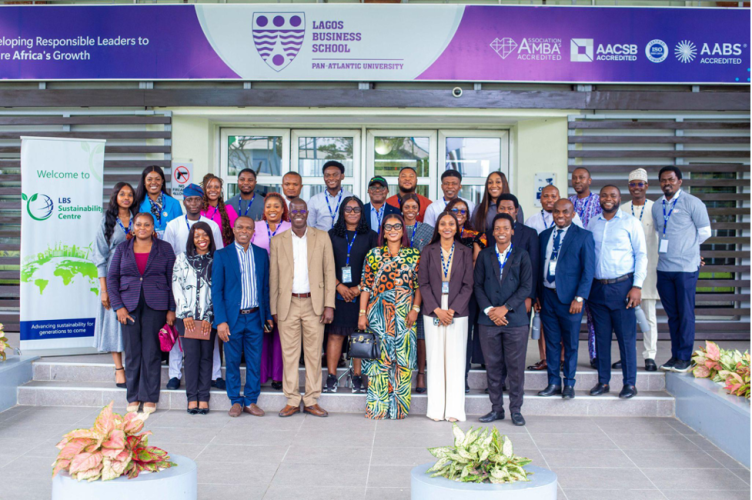
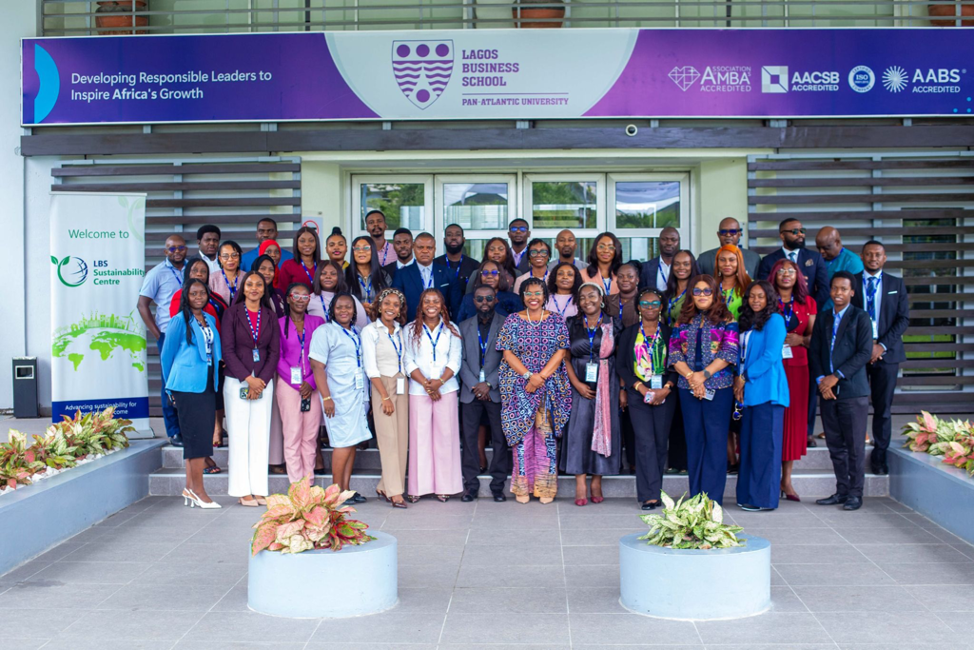
(L-R)Latifat Abagun, Programmes Associate, LBS Sustainability Centre(LBSSC); Mary Ukoli, Programmes Associate, LBSSC (2nd left), Flora Gabtony, Faculty, Lagos Business School (5th right) and Raluchukwu Chukwura, Research Assistant, LBSSC (right),with participants of the second run of the 2026 Effective Sustainability and ESG Management(ESEM)Programme during the in-class sessions held on September 23–24 2026 at Lagos Business School
The Lagos Business School Sustainability Centre (LBSSC) has concluded the second run of its Effective Sustainability and ESG Management (ESEM) Programme for 2026, strengthening participants’ understanding of how organisations can translate sustainability commitments into practical business strategies and responsible operational practices.
Held from September 1 to 24, 2026, the 3 weeks intensive programme combined live online sessions with two days of in-class learning on September 23 and 24 . Through expert-led discussions, case studies, group exercises and practical presentations, participants explored approaches to embedding sustainability into organisational strategy, governance, operations and long-term decision-making.
The programme addressed key areas of sustainability management, including environmental stewardship, climate-related business risks, social sustainability, inclusive business models, corporate governance, sustainability reporting, ethical leadership and stakeholder engagement. Participants also examined materiality assessment and its role in identifying and prioritising environmental and social issues relevant to business performance.
Commenting on the programme, Orevaoghene Atanya, Director, Lagos Business School Sustainability Centre, emphasised the importance of moving sustainability from organisational commitments to meaningful action. “Sustainability must be embedded in the way organisations think, make decisions and create value. It is not simply about meeting reporting requirements or responding to stakeholder expectations; it is about building the capabilities, governance structures and business practices that enable organisations to remain resilient, responsible and competitive over time,” she said.
Practical case studies connected sustainability concepts to organisational realities, enabling participants to examine how businesses can respond to emerging risks, meet stakeholder expectations and identify opportunities for sustainable value creation. The in-class sessions deepened the learning experience through interactive discussions, group exercises and presentations.
According to Mary Ukoli, Programme Manager, ESEM, the programme was designed to help participants move beyond understanding sustainability concepts to applying them within their professional and organisational contexts. “Our focus is to equip professionals with practical knowledge and tools they can apply in their organisations. By combining expert insights with case studies, collaborative exercises and presentations, the programme helps participants examine how sustainability and ESG considerations can inform strategy, strengthen decision-making and become part of everyday business practice,” she said.
The programme brought together expertise across sustainability management, strategy, ethics, reporting and corporate practice. Contributors included Orevaoghene Atanya, Director, Lagos Business School Sustainability Centre; Prof. Chris Ogbechie, Professor of Strategy, Lagos Business School; Dr Soromidayo George, Director, Corporate Affairs and Sustainability at CC HBC – Nigerian Bottling Company; Cima Sholatan, Corporate Sustainability Expert and General Manager, Harley Reed; Jonathan Ikeolumba, Sustainability Expert and Affiliate, LBSSC; and Flora Gabtony, Ethical Leadership Strategist and Founder, GAPEthics.
Other resource persons included Eunice Sampson, Affiliate of LBSSC and Partner, Climate Change and Sustainability at EY West Africa; Abbas Agbaje, Managing Consultant at ImpactCrest; Andrew Wogihren, Managing Director of Sustainable Insights; and Dr Sylke Jellema, Business and Sustainability Expert and LBSSC Affiliate. Their contributions supported discussions on the strategic, operational and organisational dimensions of sustainability and ESG management.
Through its executive learning programmes, the Lagos Business School Sustainability Centre continues to support professionals and organisations in developing the knowledge and capabilities required to advance responsible business practices and contribute to sustainable development.
About the Lagos Business School Sustainability Centre
Lagos Business School is Africa’s leading management education institution, and the Lagos Business School Sustainability Centre is a knowledge centre that brings together the theory and practice of business and sustainability to advance performance and development outcomes. For more information about the initiatives and upcoming events of the Lagos Business School Sustainability Centre, please contact sustainabilitycentre@lbs.edu.ng.
For more information on our programmes, visit: https://sustainabilitycentre.lbs.edu.ng/training/